Amateur
Identify the broad condition using full grade names—from Poor through Mint State. No Sheldon numbers required.
CHOOSE A SERIES
Identify the broad condition using full grade names—from Poor through Mint State. No Sheldon numbers required.
Call the precise grade using the complete Sheldon scale, including abbreviations and numerical distinctions.
NUMISMATICS · QUIZ
NUMISACADEMY · ERRORS
NUMISACADEMY RANKINGS · SEASON 01
Rankings combine exact-grade accuracy, average Sheldon point variance, Learn performance, challenge volume, and consistency.
@dieharddan
9,635RANKING POINTS@aureliamint
9,850RANKING POINTS@ladyliberty
9,480RANKING POINTSAurelia Mint@aureliamint
Die Hard Dan@dieharddan
Lady Liberty@ladyliberty
Full Bands Frank@fullbandsfrank
Toned & Loaded@tonedandloaded
Shannon StrangeYOU@strangecoins
Coin Whisperer@coinwhisperer
Denver Reverse@denverreverse
Planchet Sage@planchetsage
Mercury Rising@mercuryrising
Prototype leaderboard · Names and statistics are fictional presentation data.
NUMISACADEMY · ACADEMY
Coin grading measures preservation—not age, rarity or value. Begin with wear, then judge strike, luster, marks and eye appeal against the standards for that specific coin series.
THE GRADING METHOD
Consistency comes from using the same sequence every time. Skip a step and the coin will find a way to embarrass you at auction.
Confirm the series, date, mint, denomination and variety. Grading standards are design-specific, so know where that coin normally shows weakness and wear.
Hold the coin by its edges under a single incandescent or neutral-white light. Rotate it slowly so luster, friction, hairlines and surface disturbances reveal themselves.
Check the design’s highest points first. Wear breaks mint luster and changes surface texture; a weak strike lacks detail but may retain undisturbed luster.
Evaluate remaining detail, rim completeness, luster, contact marks, scratches, cleaning, toning and eye appeal. Location matters: a mark on a cheek hurts more than one hidden in a wreath.
Grade the obverse and reverse independently, then assign the conservative overall grade. Confirm the result against reliable series-specific photographs and written standards.
THE COMPLETE SCALE
Circulated grades describe increasing amounts of surviving detail. Mint State grades all have one thing in common: absolutely no circulation wear.
Barely identifiable by type. The date or mintmark may be partly lost and the design is worn nearly smooth.
Extremely worn. Major outlines remain, but most lettering and interior detail are weak or incomplete.
The main design is outlined. The date is readable, although rims may merge into parts of the lettering.
Heavy, even wear. Major devices and legends are visible, with full or nearly full rims and little interior detail.
A stronger Good coin. Rims and legends are clearer, with slightly more interior design remaining than at G4.
Well worn but clear. Major features are complete, with the first meaningful interior details beginning to show.
Moderate-to-heavy wear with somewhat sharper lettering and design detail than VG8.
Moderate, even wear. The complete design is bold, with many recessed details still visible.
A sharper Fine coin. More hair, feather, leaf, band or other protected detail remains than at F12.
Moderate wear on high points. Major details are clear, though the highest areas show noticeable flattening.
Light-to-moderate wear with stronger central detail and clearer separation in protected areas.
Light, even wear. Nearly all major details remain, with only moderate flattening on the highest points.
A choice Very Fine coin approaching Extremely Fine, with most detail sharp and only light high-point wear.
Light wear appears across the highest points. Most design detail is sharp and traces of mint luster may remain.
Only very light wear is visible on the highest points. Details are crisp and more original luster survives.
Slight wear or friction appears on several high points. At least half of the original mint luster generally remains.
Light friction is confined mainly to high points, with stronger luster and fewer distractions than AU50.
Only slight wear is present on the highest areas. Most mint luster remains and the coin has strong eye appeal.
The slightest trace of friction keeps the coin from Mint State. Nearly full luster and a fresh appearance remain.
No circulation wear. Numerous marks, weak strike, dull luster or unattractive toning may limit the grade.
No wear, but heavy or poorly placed marks and below-average luster remain distracting.
No wear. Marks are less severe than MS61, though strike, luster or eye appeal remains below average.
No wear and attractive luster, with noticeable contact marks or minor blemishes in important areas.
No wear, pleasing luster and fewer or smaller marks than MS63. Overall eye appeal is above average.
No wear, strong luster and an above-average strike. Only minor marks are permitted, away from focal areas when possible.
Exceptional luster and eye appeal with very few, very small imperfections and a strong strike.
Virtually flawless to the unaided eye, with booming luster, excellent strike and only minute imperfections.
An extraordinary coin with superb surfaces, luster and strike; only tiny imperfections are visible under magnification.
Nearly perfect as struck. One or two microscopic flaws may be found under close inspection.
No post-production imperfections visible under standard grading magnification, with full original luster and exceptional eye appeal.
SEE THE DIFFERENCE
A low-grade coin loses design detail through circulation. An upper Mint State coin retains every intended detail, but tiny marks, strike quality and luster determine how high it climbs.
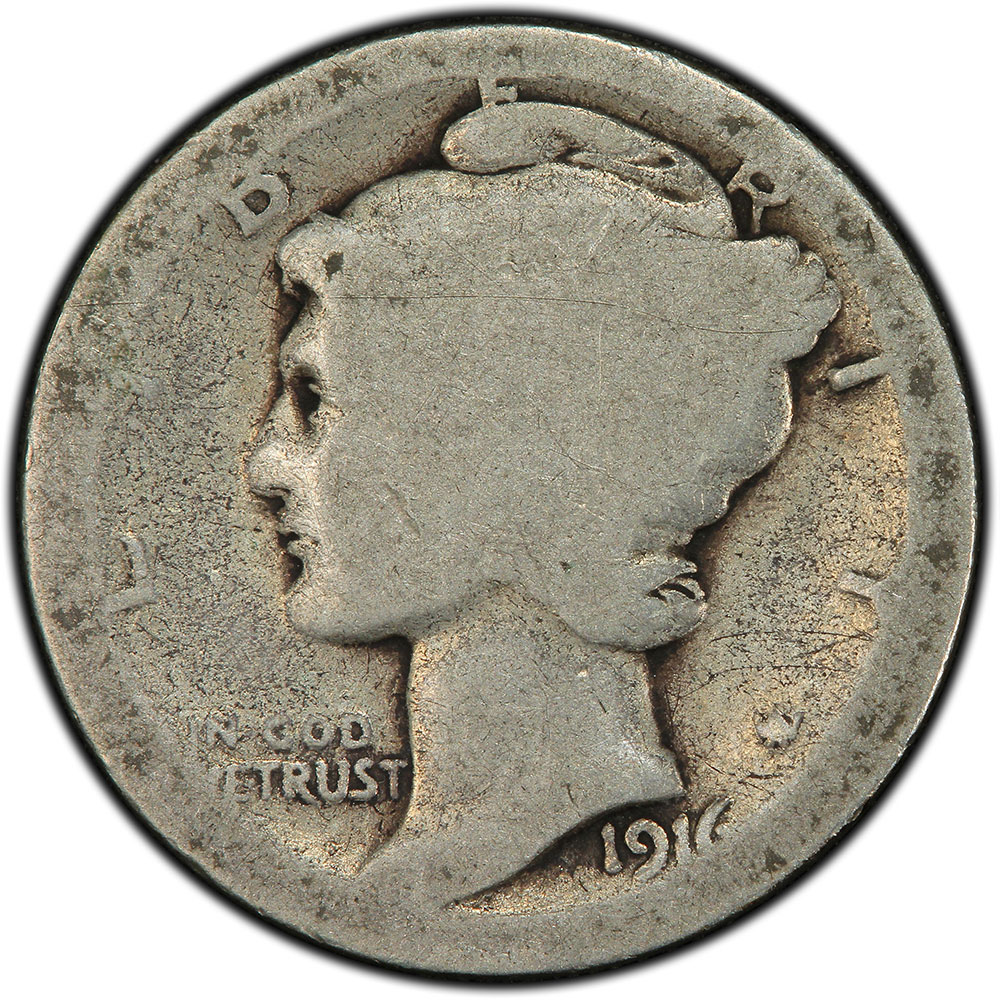
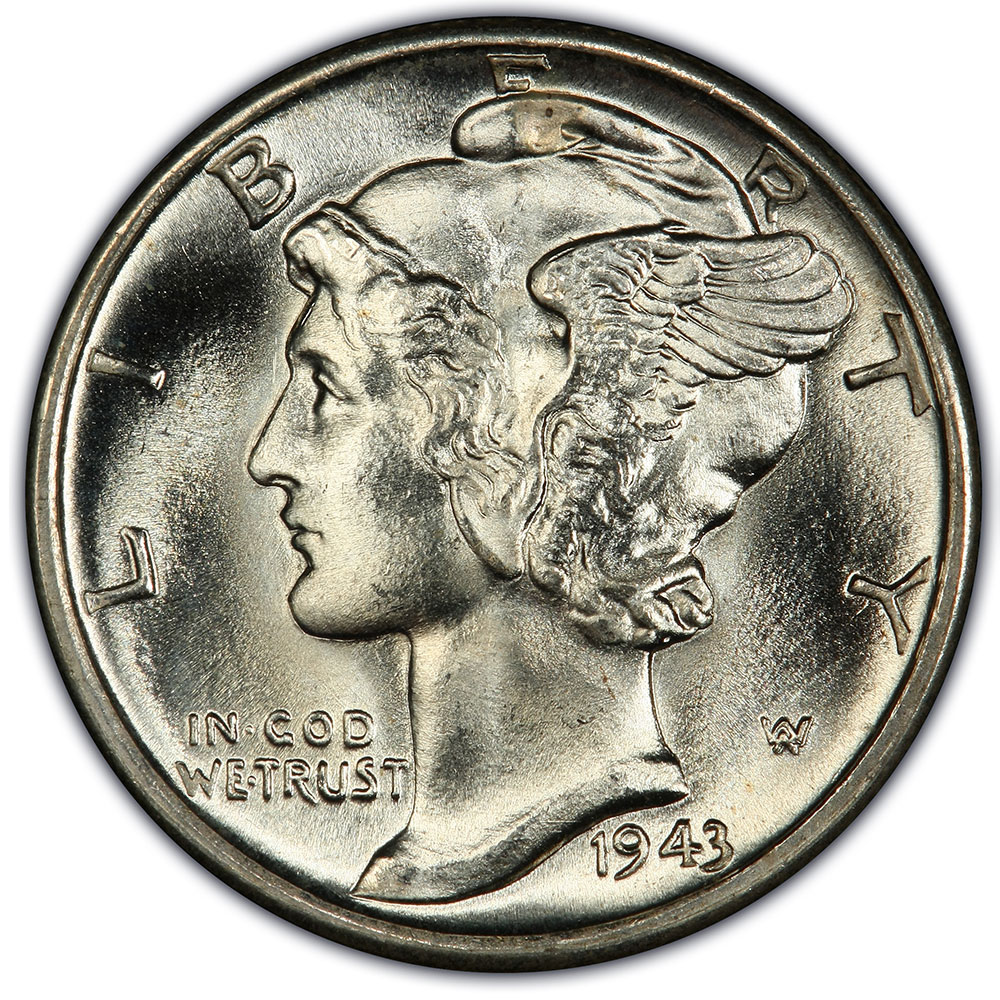
MINT ERROR FIELD GUIDE
Mint errors are unintended abnormalities created while a blank is prepared, a die is made, or a coin is struck. They are not damage added after the coin leaves the Mint.
An unstruck Type I blank or rimmed Type II planchet escaped the Mint without receiving a coin design.
The blanking punch overlapped the edge of the metal strip or a previously punched opening, leaving part of the planchet missing.
Impurities or internal stress in the planchet caused the metal to crack, peel, flake, or separate.
The collar failed to contain the planchet during striking, allowing the metal to spread beyond its normal diameter.
The planchet was positioned outside the collar and only part of the design landed on the coin.
A coin failed to eject after its first strike and received a second impression, either centered or displaced.
Foreign material or another object came between the die and planchet, leaving its outline or texture impressed into the coin.
A previously struck coin remained in the press and impressed a sunken, mirror-image design into the next planchet.
A struck coin adhered to a die and was repeatedly struck, gradually wrapping around the die into a cap-like form.
The die itself received a misaligned design impression during manufacture, transferring genuine doubled features to every coin it struck.
Insufficient striking pressure produced an unusually weak design while technicians adjusted or tested the press.
A coin already struck as one denomination was struck again by dies intended for a different denomination.
Educational prototype based on the Sheldon numerical scale, ANA-style grading principles, and NumisAcademy’s Mercury dime and Morgan dollar grading references. Market grading can vary among experienced graders and certification services.